October 7, 2026
When a home's heating or cooling system malfunctions, the temptation to search for a quick online tutorial and handle the fix independently can be strong. However, modern climate control systems are among the most intricate, high-voltage, and finely tuned pieces of equipment in any residential property. Performing reliable HVAC repairs requires far more than basic hand tools; it demands specialized technical education, advanced diagnostic equipment, and strict adherence to safety standards. Understanding what goes on behind the panels reveals why professional expertise is essential for protecting your property, your family, and your financial investment.
Understanding the Complexity of Modern Climate Control Systems
Demystifying the Science Behind Heating and Cooling Dynamics
Maintaining a comfortable indoor environment requires far more than turning a thermostat dial. Modern heating and cooling equipment functions through an intricate balance of thermodynamics, fluid dynamics, and electrical control circuits. When a system breaks down, restoring it demands a thorough understanding of these interconnected physical principles. Homeowners often view climate units as standard household appliances, yet their underlying mechanics resemble complex industrial machinery, meaning DIY HVAC repairs can easily result in further mechanical failure.
Every climate unit relies on delicate pressure balances to shift heat from one location to another. Refrigerant lines must operate within strict pressure windows, and air handlers must move precise airflow volumes across coils. If airflow drops by even a small margin, system pressure shifts, leading to frozen evaporator coils, overheated heat exchangers, or compressor burnout. Diagnosing these chain-reaction failures requires deep analytical skills that go far beyond basic troubleshooting guides.
Recognizing the Advanced Components Inside Contemporary Units
Today's climate control systems feature digital control boards, variable-speed blowers, micro-channel coils, and electronic expansion valves that communicate through low-voltage networks. These sophisticated components send diagnostic error codes when operational anomalies occur. Interpreting these codes correctly requires specialized electronic testing equipment to trace faults across microprocessors and sensor arrays.
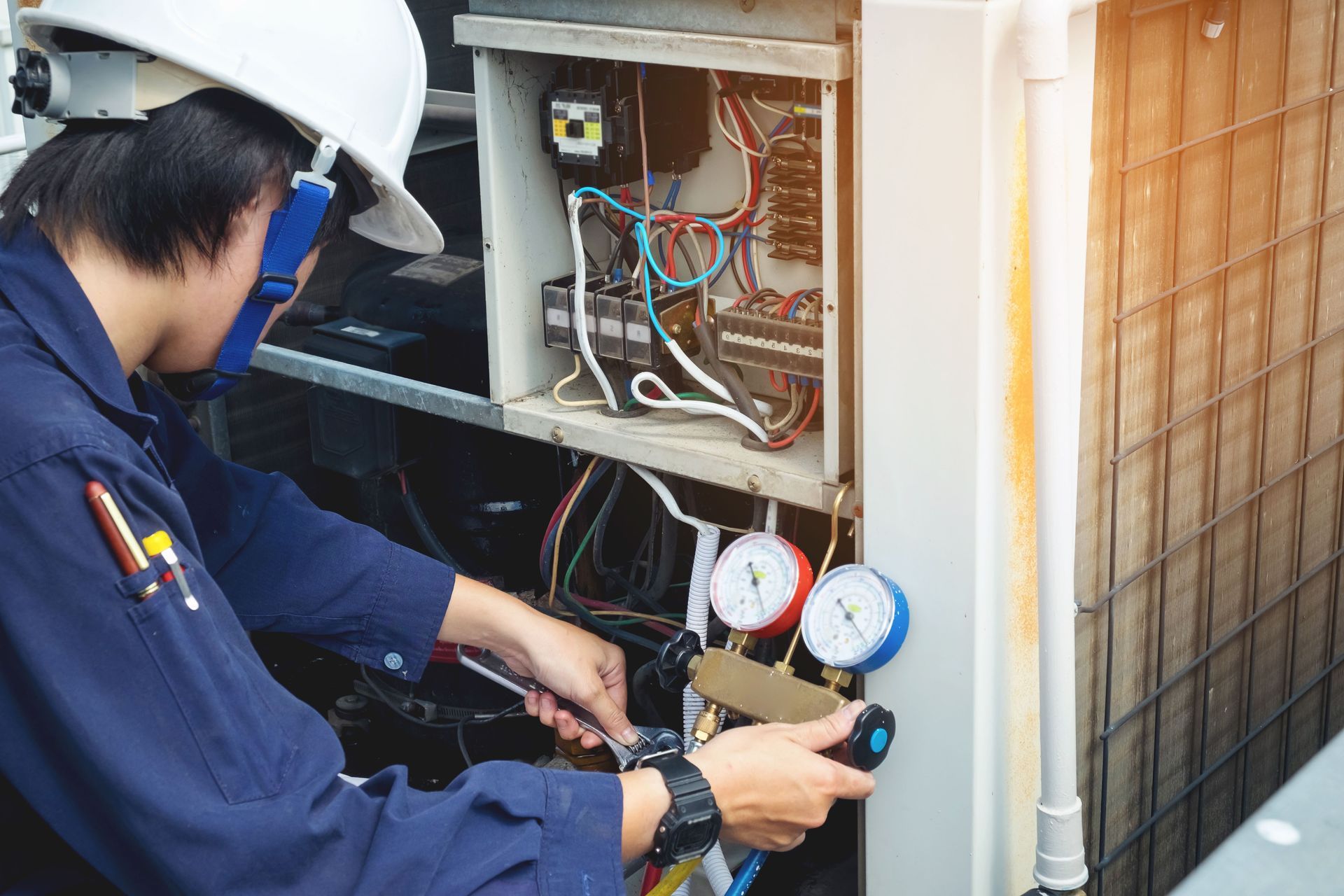
Without formal training, diagnosing an error code often leads to costly trial-and-error component swapping. Replacing an expensive control board when the actual issue is a faulty pressure switch or corrupted wiring harness wastes time and money. Professional technicians use multimeters, static pressure gauges, and computerized manifolds to pinpoint the exact root cause before executing targeted HVAC repairs.
Assessing the Hidden Hazards of DIY Maintenance
Navigating High-Voltage Electrical and Refrigerant Risks
Working on heating and cooling equipment carries inherent physical risks that require strict adherence to safety protocols. Central air conditioners and heat pumps operate on high-voltage electrical circuits capable of inflicting severe electrical shock or starting fires. Safe operation demands thorough knowledge of power disconnects, capacitor discharge procedures, and wire gauge ratings.
Beyond electrical hazards, managing chemical refrigerants introduces strict environmental and physical risks. Stored under high pressure, refrigerants can cause immediate frostbite or chemical burns upon skin contact, while venting synthetic refrigerants into the atmosphere violates federal environmental regulations. Professional technicians undergo rigorous training to safely recover and recycle these chemicals using specialized recovery pumps and certified storage tanks.
Preventing Dangerous Fuel Leaks and Carbon Monoxide Exposure
Gas furnaces and boiler systems present distinct safety risks related to fuel combustion. A cracked heat exchanger in a fuel-burning furnace can leak carbon monoxide, a colorless, odorless, and lethal gas, directly into living spaces. Identifying micro-fractures in a metal heat exchanger requires specialized inspection cameras and precision flue gas analyzers that measure combustion efficiency and emissions.
Incorrect burner adjustments or improper exhaust venting can also cause incomplete fuel combustion, leading to soot buildup and dangerous gas accumulation. According to the US BLS, there are approximately 425,200 specialized HVAC/R mechanics and installers holding field positions nationwide, reflecting the vast national scale of technical expertise required to keep systems operating safely. Attempting to service fuel lines without professional credentials compromises home safety and increases structural fire or gas leak risks.
Evaluating the Real Cost of DIY Fixes Versus Professional Service
Comparing Upfront Savings with Long-Term Equipment Damage
Attempting DIY fixes to save on upfront service fees frequently leads to secondary damage that costs significantly more than the original malfunction. A common mistake involves overcharging a cooling system with refrigerant, which floods the compressor with liquid refrigerant and destroys the motor.
Improper electrical connections can also ruin brand-new replacement parts in an instant. Installing a capacitor with incorrect microfarad ratings or wiring a transformer improperly shorts out sensitive circuit boards, doubling the repair bill. Relying on certified technicians for complex HVAC repairs ensures all replacement parts match exact manufacturer specifications, preventing unintended damage to surrounding components.
Preserving Manufacturer Warranties and Energy Efficiency Standards
Most major equipment manufacturers explicitly state in their warranty terms that coverage becomes void if the unit is serviced by an individual without certification. Installing replacement parts without professional certification can immediately invalidate multi-year component warranties, leaving property owners financially responsible for future major system failures.
Professional service also maintains your equipment's original seasonal energy efficiency and fuel utilization ratings. Minor issues like mismatched motor speeds, improper refrigerant charge, or incorrect duct static pressure drastically reduce operating efficiency. When efficiency drops, utility bills rise sharply, offsetting any initial savings achieved by skipping professional HVAC repairs.
Examining the Precision Tools Required for System Diagnostics
Utilizing Specialized Testing Gear for Airflow and Refrigerant
Accurate equipment diagnostics require specialized, high-precision tools rarely found in a standard home toolbox. Digital manifold gauges measure real-time refrigerant pressure, while dual-port anemometers evaluate air velocity across ductwork to resolve airflow bottlenecks. Micron gauges monitor deep vacuum levels during system evacuations to ensure all moisture and gases are removed before recharging.
Airflow testing also requires differential pressure gauges to measure external static pressure across air filters and cooling coils. If static pressure is too high, the blower motor works harder, consumes excess electricity, and fails prematurely. Resolving complex airflow restrictions requires professional HVAC repairs tailored to your home's unique ductwork layout.
Applying Systematic Diagnostic Protocols to Uncover Root Causes
Mastering high-tech tools is only half the equation; technicians must also apply structured diagnostic protocols to interpret data correctly. An experienced technician follows systematic decision trees to isolate issues efficiently, verifying electrical inputs and low-voltage control signals before evaluating airflow, static pressure, and refrigerant charge.
By evaluating each variable in a logical sequence, technicians avoid jumping to conclusions or replacing functioning parts prematurely. A failure that appears to be a broken thermostat might actually stem from a tripped limit switch, a clogged condensate drain, or a failing blower motor. This methodical diagnostic approach prevents unnecessary component replacements during service.
Ensuring Long-Term Comfort Through Expert Maintenance
Extending Equipment Lifespan Through Systematic Inspections
Heating and cooling systems are major financial investments that should perform reliably for fifteen to twenty years when properly cared for. Timely professional interventions prevent minor mechanical wear from expanding into catastrophic failures that shorten total system lifespan.
During a professional inspection, technicians clean flame sensors, lubricate motor bearings, clear condensate drain lines, and tighten electrical connections. These proactive measures reduce operational friction and prevent sudden breakdowns during peak summer heat waves or winter freezing spells. Investing in timely professional HVAC repairs keeps all components performing within design parameters year after year.
Choosing Certified Professionals for Reliable Indoor Comfort
When climate systems malfunction, choosing qualified technicians ensures safety, system efficiency, and long-term reliability. Experienced specialists possess the technical knowledge, specialized diagnostic tools, and safety certifications required to manage complex electrical, fuel, and refrigerant systems safely.
From accurate diagnostics to precision component replacements, professional service restores system balance while protecting your home investment. Relying on trained field experts remains the safest and most cost-effective path to achieving consistent indoor comfort throughout every season. For dependable, expert service tailored to your home's unique heating and cooling needs, trust the experienced team at J Halligan & Sons to execute your HVAC repairs with precision and care.